
Track 1 of 7 · 6 min read · Updated
How long does a mushroom trip last? The timing, phase by phase
A magic mushroom trip lasts about four to six hours. When it starts, when it peaks, why it comes in waves and what changes the timing, with sources.
On this page · 10 chapters
- 01 The phases at a glance
- 02 Waiting: the first half hour
- 03 Come-up: from 30 minutes to the first hour
- 04 Peak: roughly the first to the third hour
- 05 Waves: the third and fourth hour
- 06 Comedown: from about the fourth hour
- 07 Afterglow and the evening
- 08 What changes the timing
- 09 How long truffles last
- 10 Taking more later does not extend it gently
A magic mushroom trip lasts about four to six hours from eating to the point where the effects have largely worn off. The Amsterdam addiction centre Jellinek puts the onset at 30 to 60 minutes and the end at four to six hours, with the most intense experiences in the first two hours. Feeling completely clear takes longer: DRUGSinfo, the Dutch public information service of the Trimbos Institute, notes that people are still not sober once the main effects have passed.
Controlled studies give a similar picture. In pooled data from three Swiss trials with three fixed doses of pure psilocybin, the subjective effects lasted between 5.5 and 6.4 hours on average, longest at the highest dose, and the highest blood levels of psilocin were reached after about two hours (Holze et al. 2023). Mushrooms and truffles are less predictable than a capsule, so read every number below as a typical range.
The phases at a glance
The clock times are a schematic based on the sources on this page. Real trips shift by half an hour or more in either direction.
| Phase | Typical time after eating | What usually happens |
|---|---|---|
| Waiting | 0:00 to 0:30 | Little or nothing. Psilocybin is still being converted into psilocin. |
| Come-up | 0:30 to 1:00 | First physical signs, then changes in light, sound and mood. |
| Peak | 1:00 to 2:30 | The most intense part: strong visual changes, slowed time, associative thinking. |
| Waves | 2:30 to 4:00 | Effects ebb and return. Talking and moving around usually get easier. |
| Comedown | 4:00 to 5:30 | Visuals fade, thinking normalises, tiredness and hunger appear. |
| Afterglow | 5:30 to 7:00 | A quiet, slightly altered evening. Still not sober enough for traffic. |
| Next day | Tiredness for some, occasionally a delayed headache. |
Waiting: the first half hour
After you swallow mushrooms, the body turns psilocybin into psilocin, the compound that acts on serotonin 5-HT2A receptors in the brain. That takes time. DRUGSinfo gives 20 to 60 minutes before reality starts to feel different, and FRANK in the UK says mushrooms can take more than 30 minutes to work, so you should wait before taking another dose.
This is the moment when the most common timing mistake happens. Feeling nothing after 40 minutes, people eat a second portion, and both portions then arrive at once. The difficult moments page shows how often that pattern turns up.
Come-up: from 30 minutes to the first hour
The come-up is often more physical than visual. Jellinek lists dilated pupils, a mild rise in heart rate and blood pressure, problems with balance, nausea, vomiting and a dry mouth among the physical effects. Then the senses start to shift: light looks brighter, sounds feel closer, a plain surface starts to show texture.
Some unease in this phase is normal. It is the transition people find hardest to sit through, because the body feels strange before the mind has anything to hold on to. It usually settles once the effects are fully there.
Peak: roughly the first to the third hour
According to Jellinek, the most intense experiences happen in the first two hours of a trip. That matches the lab data: the Swiss pooled analysis found the highest psilocin concentrations about two hours after a dose. During the peak, colours deepen, patterns move across walls and faces, and time slows down. Jellinek notes that seconds can seem to last minutes and that thinking becomes associative, with unusual connections and sometimes loops of the same thought.
How strong the peak gets depends first of all on the dose. A Swiss analysis of 409 psilocybin sessions found dose to be the strongest predictor of every measured effect (Studerus et al. 2012). Mood, expectations and surroundings come next: see set and setting.
Waves: the third and fourth hour
Jellinek calls the trip wave-like. Instead of tapering off evenly, the effects ebb and then return, sometimes almost as strongly as at the peak. People often notice that they can talk again, eat a piece of fruit or listen to a whole song, and a few minutes later the room starts to breathe again.
The waves are one reason why the end of a trip is hard to judge from the inside. A quiet stretch at hour three is rarely the end.
Comedown: from about the fourth hour
From around four hours, the visual effects fade and thinking returns to something close to normal. Many people feel tired, hungry and emotionally soft. Measured in the lab, the half-life of psilocin is short: 1.4 to 1.8 hours in the Swiss trials, and about 3 hours in an American study with escalating doses (Brown et al. 2017). Short or not, a residue of the effects lingers into the evening.
Afterglow and the evening
DRUGSinfo states that after the main effects people are still not sober, and Jellinek advises against taking part in traffic after use; in the Netherlands it is forbidden. A calm evening, food and sleep are the usual end. Some people describe a bright, talkative mood; others feel flat or drained. Both are common. The day after page covers sleep, headache and the following days.
What changes the timing
- Dose. In the Swiss trials, both the duration and the intensity of the effects rose with the dose. The longest average, 6.4 hours, came with the highest dose.
- Mushroom or tea. The Australian Alcohol and Drug Foundation says effects usually begin around 30 minutes after eating mushrooms, but within 5 to 10 minutes when they are taken as a soup or tea.
- A full or empty stomach. Dutch-Smart's product pages state that truffles taken on an empty stomach give the strongest and most predictable effect. A meal shortly before tends to make the onset slower and harder to read.
- The material itself. Potency varies widely between species, batches and even single mushrooms. Mushrooms seized in Germany contained from under 0.003% to 1.15% psilocybin (Musshoff et al. 2000).
- Body weight, surprisingly little. In the Swiss trials, body weight did not influence how psilocin was absorbed and cleared, or how strong the response was.
- Other substances. Jellinek warns that cannabis prolongs and strengthens a trip. Alcohol and other drugs make the course less predictable.
How long truffles last
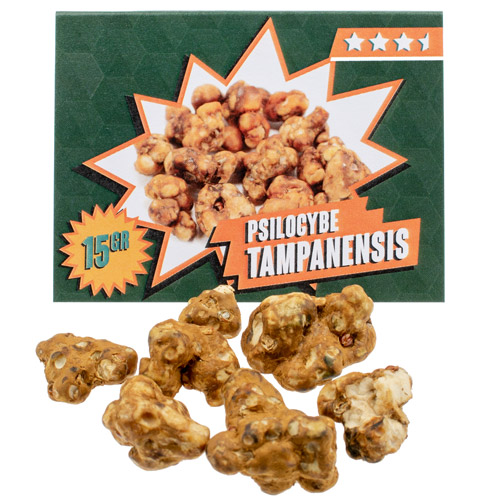
Magic truffles contain the same active compounds and follow a similar course. Jellinek describes mushrooms and truffles together and gives the same four to six hours. Dutch-Smart's own product pages give somewhat shorter figures for their strains, such as an onset after 20 to 45 minutes and a total duration of 3 to 5 hours on average for Tampanensis. Where truffles are legal and how the strains compare is on the truffles page.
Single · Dutch-Smart
Tampanensis Magic Truffles
Shop rating: mild to moderate
€14.95View at Dutch-Smart
Single · Dutch-Smart
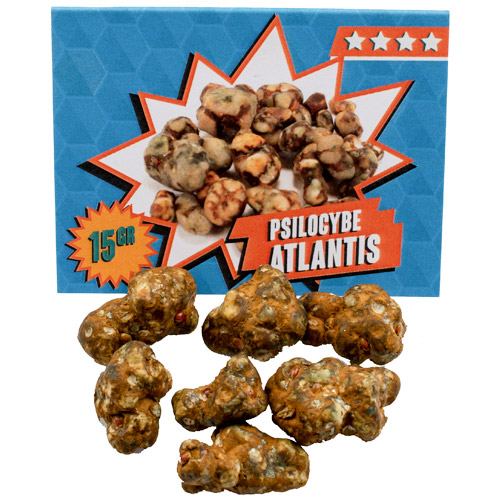
Atlantis Magic Truffles
Shop rating: moderate to strong
€14.95View at Dutch-Smart
Taking more later does not extend it gently
Psilocybin builds tolerance quickly. Jellinek explains that with repeated use in a short period the effects no longer appear, and you have to stop for a while before they return. A second dose late in a trip is unlikely to give a smooth extension. Early in a trip, it stacks on top of the first one and makes the peak stronger.