
Track 3 of 7 · 4 min read · Updated
Set and setting for a mushroom trip, and what a trip sitter does
Set is your state of mind, setting is the place and the people. What research shows about both, how to plan each phase of a trip, and what a sober sitter does.
Set and setting are the two things besides the dose that shape a mushroom trip. "Set" is your state of mind: mood, expectations, earlier experiences. "Setting" is everything around you: the room, the people, the sounds, the time you have. The Australian Alcohol and Drug Foundation defines set as a person's state of mind, previous encounters with psychedelic drugs and expectations of what will happen, and notes that a calm, quiet and relaxed environment can contribute to a pleasant experience.
The terms were popularised in the early 1960s by Timothy Leary and colleagues. Since then, both have been measured.
What research shows
The best data come from lab studies. A Swiss team pooled 23 studies with 409 psilocybin sessions in 261 healthy volunteers (Studerus et al. 2012). Dose was the strongest predictor of the effects. After that, the person and the place mattered:
- People in an emotionally excitable state just before taking psilocybin, and younger participants, were more likely to have unpleasant or anxious reactions.
- A study setting with a PET brain scanner was one of the strongest predictors of an anxious response.
- A tendency to become absorbed in experiences, and having had few psychological problems in the weeks before, went with more pleasant experiences.
An online survey run from Imperial College London followed people who planned to take a psychedelic on their own initiative (Haijen et al. 2018). A positive state of mind beforehand, and taking it with recreational intentions, made a challenging experience less likely. Higher doses increased every kind of effect, the difficult ones included.
In a survey of 1,993 people about their worst experience with mushrooms, the absence of physical comfort and social support was among the factors linked to risky behaviour during the trip (Carbonaro et al. 2016).
Set: the state you start in
Jellinek's advice is to use only when you feel well, and not when you are ill, out of sorts or have psychological problems. Mushrooms amplify the mood you bring, so a trip on a bad week tends to be a hard trip.
Some people should not take mushrooms at all. Jellinek warns that mushrooms can trigger a psychosis in people who are susceptible to it, and can cause a relapse in people who have had one. The Alcohol and Drug Foundation says people on psychiatric medication should not take them. Lithium is a specific danger: in 62 online reports of lithium combined with a psychedelic, 47% involved seizures (Nayak et al. 2021).
Expectations count as well. Reading what the phases feel like, from the come-up to the comedown, takes away some of the surprise that makes the first hour unsettling.
Setting: planning the trip phase by phase
A good setting is one you can stay in for the whole trip, without needing to go anywhere or deal with anyone you did not choose.
| Phase | What helps |
|---|---|
| Waiting | A familiar room, phone on silent, no second portion within reach. |
| Come-up | Somewhere to lie down, a bucket or bathroom close by, a blanket, water. |
| Peak | Low light, music you chose in advance, no visitors, no tasks. |
| Waves | Space to move: a garden or a quiet walk you know, if the sitter comes along. |
| Comedown | Simple food ready, nothing planned, no driving or cycling. |
| Evening | An early night and a free next day. Jellinek advises taking the day after off. |
Crowds, parties, festivals and unfamiliar cities are hard to withdraw from if the trip turns difficult. Hash and cannabis are a separate risk: Jellinek warns that they prolong and strengthen a trip, and a pleasant trip can turn into a difficult one.
The trip sitter
A trip sitter is someone who stays sober and keeps an eye on the person who is tripping. DRUGSinfo, the Dutch public information service, advises arranging one: someone who has not used anything. Jellinek adds that a sober sitter can help keep the trip on track.
A sitter does not guide the experience. The job is practical:
- Keep the room calm and safe, and deal with the door, the phone and anyone who drops by.
- Make sure the person does not go into traffic, onto a balcony or into water.
- Offer water, a blanket or a change of music when asked.
- Stay present without filling the silence. Many people want company more than conversation.
- Know where you are, which emergency number to call and when to call it.
Clinical research takes this further. Guidelines for psilocybin studies call for careful preparation, a safe physical environment and interpersonal support from at least two monitors during a session (Johnson et al. 2008). A home trip will not look like that, but the principle carries over: someone sober, someone trusted, somewhere safe.
Agree on this before you start
- The amount, and that there will be no second portion.
- Who the sitter is, and that they stay sober for the whole trip.
- A rough plan for the hours, including when to stay inside.
- What the sitter should do if it gets hard. The difficult moments page describes the steps Jellinek uses.
- When to call for help: if someone becomes very agitated, aggressive or does dangerous things, call 112 in the Netherlands and the EU.
A mild start for a stay in the Netherlands
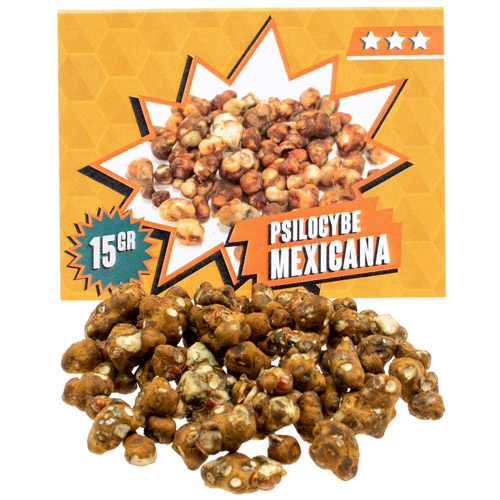
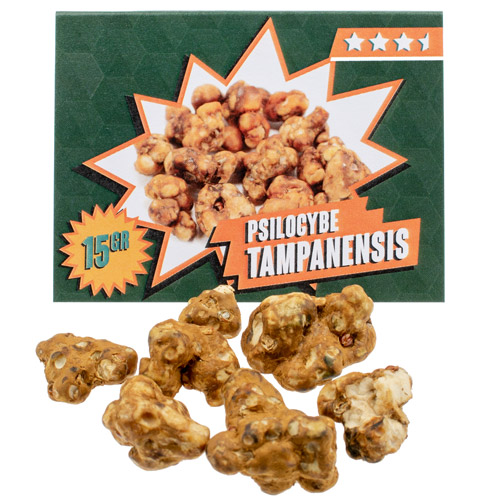
If you are in the Netherlands, legal truffles let you choose the strength. Dutch-Smart calls Mexicana the most accessible choice for people with no prior experience and says that sharing one 15 gram package between two people is mild to pleasantly moderate for most people. Tampanensis is described by the shop as mild to moderate and suitable as an entry-level strain. See the choice guide for the full scale.
Single · Dutch-Smart
Tampanensis Magic Truffles
Shop rating: mild to moderate
€14.95View at Dutch-Smart